
Department of Oral & Maxillofacial Surgery
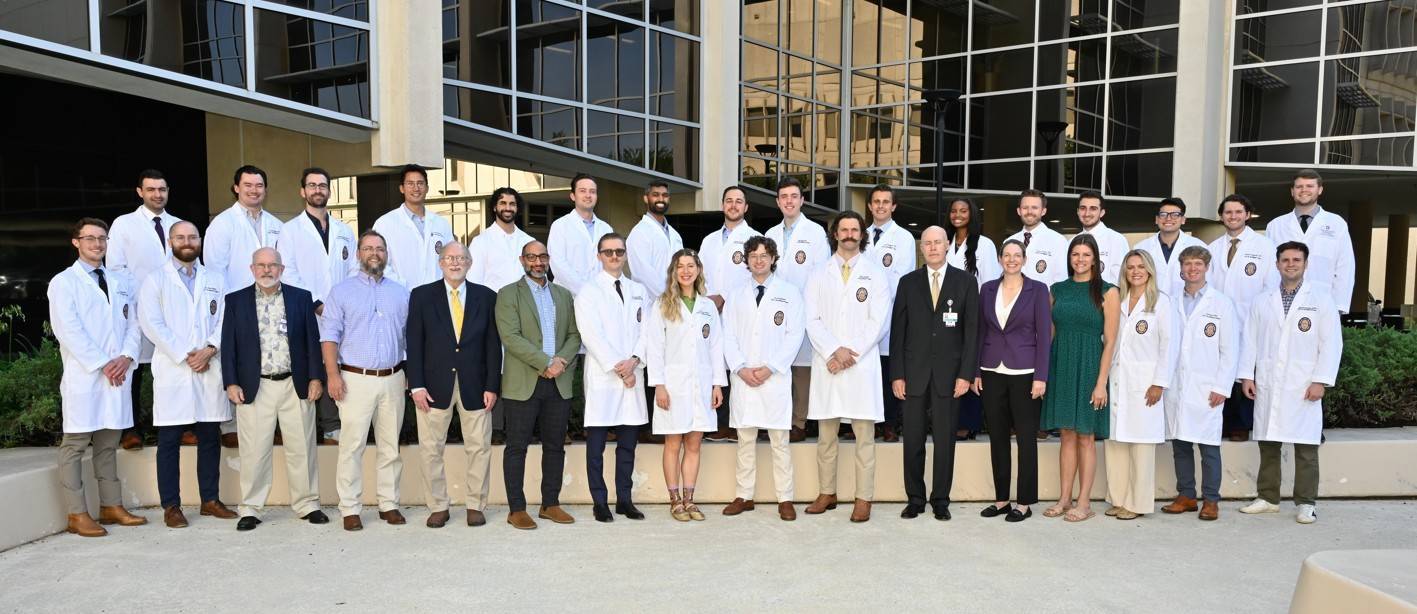
- Vision: to be a leading research-extensive department, inspiring students and residents to achieve the highest levels of intellectual and personal development through an integrated health care environment.
- Mission: Provide excellent medical and dental education, clinical care, service, and research through a diverse community of faculty, students, residents, staff and healthcare professionals.
A Message from the Chair
Welcome to the Louisiana State University Health Sciences Center New Orleans Department of Oral and Maxillofacial Surgery.
LSU Oral and Maxillofacial Surgery is a department defined by its history, surgical experience, breadth of training, educational outcomes, and distinctive culture of early operative responsibility and surgical autonomy.
Our history extends far beyond the founding of the LSU School of Dentistry or even the emergence of oral and maxillofacial surgery as a modern surgical specialty. The lineage of today's Department can be traced through the dental and oral-surgical services of Charity Hospital of New Orleans, one of America's oldest public hospitals.
Charity Hospital was founded in 1736. By 1891, historical records document a dedicated dental service at Charity Hospital, establishing a direct institutional lineage of dental care at the hospital more than 130 years ago. Over the ensuing decades, that service evolved from hospital dentistry into increasingly formalized education and surgical care of diseases and injuries of the mouth, jaws, and face.
This history predates the widespread use of the term oral surgery itself.
By the early twentieth century, Charity Hospital's dental service had become an important environment for dental and surgical education in New Orleans. Historical records subsequently document formal training in oral surgery, including treatment of fractures of the maxilla and mandible, cleft and craniofacial conditions, anesthesia, and other surgical diseases of the face and jaws. Resident dentists were ultimately incorporated into this hospital-based system, creating the postgraduate educational lineage from which the modern LSU Oral and Maxillofacial Surgery residency emerged.
For that reason, LSU Oral and Maxillofacial Surgery can trace its institutional origins to 1891 and can reasonably claim one of the oldest—and arguably the oldest—departmental lineages in oral and maxillofacial surgery in the United States.
That statement requires an important distinction. We are not suggesting that a modern Oral and Maxillofacial Surgery department or residency existed under that name in 1891. The specialty itself did not yet exist in its modern form. Rather, the clinical and educational lineage that ultimately became LSU Oral and Maxillofacial Surgery can be traced to Charity Hospital's nineteenth-century dental service.
That history also illustrates an important point about our specialty.
Oral and maxillofacial surgery did not arrive late to the surgical treatment of the face. Its predecessors helped shape facial surgery itself.
In the late nineteenth and early twentieth centuries, dentists, physicians, and surgeons were treating injuries and diseases of the jaws, mouth, and face in overlapping clinical environments. At Charity Hospital, physicians and dentists participated in the developing field of oral surgery, and during World War I these professions worked side by side caring for devastating maxillofacial injuries. Those experiences helped shape the interdisciplinary foundations from which modern facial surgery and oral and maxillofacial surgery evolved.
The terminology and specialty boundaries came later.
The patients came first.
From Charity Hospital to Modern Oral and Maxillofacial Surgery
By the early 1920s, resident dentists were serving at Charity Hospital, establishing the hospital-based postgraduate educational lineage from which today's LSU Oral and Maxillofacial Surgery residency developed.
The Charity Hospital oral surgery residency was incorporated into the newly established LSU School of Dentistry in 1972. Under the subsequent leadership of John N. Kent, DDS, LSU expanded its contributions to orthognathic surgery, facial reconstruction, temporomandibular joint surgery, implant surgery, facial cosmetic surgery, trauma, pathology, and surgical education.
The residency expanded from three years to four years in 1978.
Then, in 1989, LSU became part of the first handful of oral and maxillofacial surgery programs to establish the integrated six-year OMFS–MD training model, combining the MD degree and medical education with general surgery, anesthesia, surgical specialties, and comprehensive oral and maxillofacial surgery training.
That six-year model remains a cornerstone of LSU today.
But LSU has continued to evolve.
One Department. Four Divisions.
Today, the LSU Department of Oral and Maxillofacial Surgery is considerably larger than the OMFS residency alone.
The Department is responsible for more than 120 people across four divisions:
- Oral and Maxillofacial Surgery
- General Practice Residency / Advanced Education in General Dentistry (GPR/AEGD)
- Orofacial Pain
- Dental Anesthesiology
The Department also includes the LSU School of Dentistry Ambulatory Surgery Center, creating an integrated academic environment encompassing dentistry, medicine, surgery,
anesthesia, pain management, hospital care, ambulatory surgery, education, and research.
Our postgraduate educational programs currently include:
Six-Year Integrated OMFS–MD Residency — 4 residents per year
A comprehensive six-year residency incorporating the MD degree from the LSU School of Medicine. The program is fully accredited by the Commission on Dental Accreditation (CODA).
Four-Year OMFS Certificate Residency — 2 residents per year
A comprehensive four-year oral and maxillofacial surgery residency leading to a certificate in Oral and Maxillofacial Surgery. The program is fully CODA accredited.
One-Year Non-Categorical OMFS Internship
An intensive year of hospital and clinical oral and maxillofacial surgery training for dentists seeking additional surgical experience and preparation for residency.
GPR/AEGD — 4 residents per year
The Department's General Practice Residency/Advanced Education in General Dentistry program provides advanced postgraduate dental and hospital training and is fully CODA accredited.
Orofacial Pain Residency — 2 residents per year
A CODA-accredited postgraduate residency dedicated to the diagnosis and management of orofacial pain disorders.
OMFS Externship
Dental students from across the country can rotate with LSU Oral and Maxillofacial Surgery and participate in the clinical, operative, hospital, trauma, and academic environment of the residency.
The Department's Division of Dental Anesthesiology further expands our expertise in anesthesia, perioperative medicine, ambulatory surgery, education, and patient safety. Development of postgraduate educational opportunities in Dental Anesthesiology represents part of the Department's continuing growth, although LSU does not currently operate a Dental Anesthesiology residency program.
A Deep and Diverse Surgical Faculty
The breadth of LSU's clinical training is supported by a large and diverse surgical faculty.
LSU OMFS residents train with 23 oral and maxillofacial surgeons, including 8 full-time and 15 additional surgical faculty who actively participate in resident education, operative care, and clinical coverage across our training sites. Eight LSU OMFS faculty are fellowship-trained surgeons.
Our fellowship-trained faculty include three surgeons trained in Head and Neck Oncology and Microvascular Reconstruction, three in Facial Cosmetic Surgery, one in Cleft and Craniofacial Surgery, and one in Craniomaxillofacial Trauma. In addition, four LSU OMFS faculty are board certified in Facial Cosmetic Surgery, providing additional depth in facial aesthetic surgery beyond fellowship training alone.
Collectively, our faculty provide advanced expertise across the full scope of oral and maxillofacial surgery, including head and neck oncology, microvascular free-tissue reconstruction, facial cosmetic surgery, cleft and craniofacial surgery, craniomaxillofacial trauma, orthognathic surgery, temporomandibular joint surgery, and advanced dentoalveolar and implant reconstruction.
At LSU, our faculty are not simply names on a roster. They operate with residents, teach, provide clinical and surgical coverage, and participate directly in resident education across our hospital, clinic, and ambulatory surgery network. This depth of active surgical faculty gives LSU residents exposure to a large and diverse group of practicing oral and maxillofacial surgeons throughout their training.
Resident Support and Fully Funded Medical School Tuition
One of the most important features of LSU's six-year OMFS–MD residency is the substantial financial investment the Department makes in its residents.
LSU fully funds medical school tuition and associated fees for residents in the six-year OMFS–MD program.
This commitment is not limited to a fixed dollar amount. LSU covers the cost of medical school tuition and associated fees as tuition changes over time.
Residents therefore receive the MD degree and integrated medical education without personally paying medical school tuition and associated fees, eliminating one of the largest financial burdens associated with many six-year oral and maxillofacial surgery programs.
The Department's financial support extends well beyond medical school tuition. LSU OMFS also provides or funds many of the professional expenses residents encounter during training, including:
- USMLE Step 1, Step 2, and Step 3 examination fees
- ABOMS Qualifying Examination fees
- OMSITE examination fees
- medical and dental licensing fees
- BLS, ACLS, PALS, and ATLS certification
- AAOMS meeting support for chief residents and resident presenters
- conference support for residents presenting accepted research
- housing during Baton Rouge and Charlotte rotations
- LSU Oral and Maxillofacial Surgery Review Course attendance
- LSU Pearls Course attendance
- meal support and additional institutional resident benefits
Taken together, these benefits reflect a deliberate departmental commitment to reduce the financial cost of residency education while providing residents the examinations, licenses, certifications, professional education, and academic opportunities necessary for their development as oral and maxillofacial surgeons.
Cut Early. Cut Often.
There is another characteristic of LSU Oral and Maxillofacial Surgery that cannot be adequately described by case numbers alone.
It is our culture.
For generations, LSU residents have learned surgery by doing surgery. Within our program, that philosophy has long been summarized simply:
“Cut Early. Cut Often.”
At LSU, meaningful operative responsibility does not begin during the final years of residency.
It begins in the intern year.
First-year LSU OMFS residents participate directly in maxillofacial trauma, dentoalveolar surgery, treatment of odontogenic infections, intravenous sedation, dental implant surgery, and other operative care.
Intern expectations include significant experience in mandibular fracture management and closed reduction, selected open reduction and internal fixation procedures, comprehensive dentoalveolar surgery, extraoral drainage of odontogenic infections, approximately 50 intravenous sedation cases, and an average of 35 dental implants placed.
This is intentional.
Progressive surgical autonomy is a defining characteristic of LSU OMFS training.
Residents are given increasing operative responsibility as their judgment, technical ability, and experience develop. Faculty supervision, patient safety, and appropriate graduated responsibility remain fundamental, but our residents are expected to become surgeons by operating—not by spending the early years of residency watching surgery from the sidelines.
That philosophy extends throughout residency. Junior residents assume meaningful surgical responsibility early, while senior residents progressively develop the judgment, confidence, technical independence, and leadership expected of practicing oral and maxillofacial surgeons.
The result is a demanding training environment.
LSU has never attempted to make surgical training easy. We expect our residents to work hard, accept responsibility, learn from difficult cases and complications, and return prepared to improve.
Resilience matters here.
So do accountability, preparation, repetition, work ethic, and the willingness to take responsibility for a patient.
We believe surgical confidence is earned through preparation, repetition, responsibility, and experience.
At LSU, that process starts early.
Surgical Experience at LSU
LSU is a high-volume, full-scope oral and maxillofacial surgery training program.
The most meaningful way to demonstrate that is not with adjectives, but with the operative experience of our residents.
The LSU OMFS Department logged 12,468 tracked procedures in 2026. The average major operative procedures logged per graduating chief was 1,222, excluding routine dentoalveolar procedures classified as “Other.”
Those procedures included:
- 1,188 trauma procedures
- 1,472 pathology procedures
- 659 orthognathic and craniofacial procedures
- 2,669 reconstructive and cosmetic procedures
- 6,480 additional tracked procedures
Within those categories, residents logged in 2026:
- 566 alveolar and mandibular fracture procedures
- 84 malar fracture procedures
- 59 orbital fracture procedures
- 362 facial laceration procedures
- 500 cyst and benign bone/soft-tissue neoplasm procedures
- 137 malignant bone and soft-tissue neoplasm procedures
- 122 TMJ procedures within the pathology category
- 579 infection procedures
- 396 mandibular orthognathic procedures
- 200 maxillary orthognathic procedures
- 48 genioplasties
- 289 flap and graft procedures
- 20 microvascular free flaps
- 58 additional temporomandibular joint reconstructive procedures
- 175 rhinoplasties
- 97 blepharoplasty/eyelid procedures
- 33 rhytidectomy/lipectomy procedures
- 1,721 dental implant procedures
Anesthesia is another major component of LSU training. Residents logged 3,058 anesthesia cases, including 1,735 IV sedation cases.
These figures represent tracked procedures—not patient visits. They should not be interpreted as the total number of patients evaluated in LSU clinics, emergency departments, hospitals, or faculty practices.
They demonstrate something more important: the breadth and depth of the operative experience available to an LSU resident.
American Board of Oral and Maxillofacial Surgery Success
High operative volume is only one measure of residency education.
Another is how graduates perform when evaluated against national standards.
In its publication of program-specific examination performance, the American Board of Oral and Maxillofacial Surgery (ABOMS) reported cumulative examination success rates for individual OMFS residency programs for 2019–2025.
For Louisiana State University School of Dentistry – New Orleans, ABOMS reported:
- 100% success on the ABOMS Qualifying Examination (QE) — 30 candidates
- 97% success on the ABOMS Oral Certifying Examination (OCE) — 31 candidates
These results are particularly meaningful because they are independently reported by ABOMS rather than internally calculated or self-reported by LSU.
Our objective is not simply to provide residents with a large number of surgical cases.
It is to combine high-volume clinical experience, comprehensive didactic education, progressive surgical responsibility, and preparation for successful completion of the American Board of Oral and Maxillofacial Surgery certification process.
Research and Academic Development
LSU Oral and Maxillofacial Surgery is making a major investment in expanding its academic and research mission.
The Department currently has 85 active research projects, including 45 projects that have received Institutional Review Board (IRB) approval and progressed into active investigation and data collection.
These projects span the clinical and academic scope of the Department and represent a growing pipeline of resident, faculty, and collaborative research. Residents have opportunities to participate throughout the research process, including study development, data collection and analysis, scientific presentation, manuscript preparation, and publication.
Our objective is to build a sustained research environment that complements LSU's high-volume clinical and surgical training and provides residents meaningful opportunities to contribute to the scientific advancement of oral and maxillofacial surgery.
Full-Scope Oral and Maxillofacial Surgery
LSU residents train throughout the contemporary scope of oral and maxillofacial surgery, including:
Maxillofacial Trauma
Mandibular, midface, orbital, naso-orbito-ethmoid, frontal sinus, and panfacial fractures; dentoalveolar trauma; facial lacerations; and reconstruction of complex facial injuries.
Orthognathic Surgery
Diagnosis, virtual and conventional surgical planning, maxillary and mandibular osteotomies, genioplasty, craniofacial surgery, and management of complex dentofacial deformities.
Head and Neck Pathology and Reconstruction
Benign and malignant pathology, ablative surgery, reconstruction, regional flaps, grafting, and microvascular free-tissue transfer.
Temporomandibular Joint Surgery
Comprehensive medical and surgical management of TMJ disease, including minimally invasive arthroscopy, open joint procedures, and reconstruction.
Cleft and Craniofacial Surgery
Treatment of congenital craniofacial differences and exposure to primary and secondary cleft and craniofacial procedures, including open cranial vault reconstruction, cranial vault distraction osteogenesis, Le Fort I, II, and III distraction osteogenesis, and mandibular distraction osteogenesis.
Facial Cosmetic Surgery
Rhinoplasty, blepharoplasty, rhytidectomy, neck lifting, brow lifting, facial rejuvenation, soft-tissue procedures, facial augmentation, and other surgical and nonsurgical facial aesthetic procedures.
Dentoalveolar, Implant and Reconstructive Surgery
Advanced dentoalveolar surgery, dental implants, full-arch reconstruction, All-on-X techniques, bone and soft-tissue grafting, and complex implant rehabilitation.
Anesthesia and Perioperative Medicine
Extensive anesthesia experience, including ambulatory anesthesia and management of medically complex surgical patients.
Three Level I Trauma Centers
Trauma has been central to the LSU experience since the Charity Hospital era.
Today, LSU residents receive extensive training associated with three Level I trauma centers in three different clinical environments.
University Medical Center New Orleans is LSU's principal New Orleans teaching and trauma hospital and the modern successor to the Charity Hospital clinical environment.
Our Lady of the Lake Regional Medical Center in Baton Rouge provides another major Level I trauma experience, with LSU Oral and Maxillofacial Surgery participating extensively in facial trauma and maxillofacial surgical care.
Residents also rotate in Charlotte, North Carolina, within the Atrium Health system, including Carolinas Medical Center, another Level I trauma center.
Training across multiple major trauma systems exposes residents to differences in patient populations, referral patterns, surgical teams, institutional systems, and approaches to complex maxillofacial injury.
Dentistry, Medicine and Surgery
The evolution of LSU mirrors the evolution of oral and maxillofacial surgery itself.
What began in the nineteenth century as a dental service caring for patients at Charity Hospital evolved into formal hospital dentistry, oral surgery, residency education, and ultimately the modern specialty of oral and maxillofacial surgery.
That heritage remains important.
Our dental foundation provides an understanding of occlusion, dentoalveolar anatomy, dental implants, and the relationship between the teeth and facial skeleton that is unique among surgical specialties. Medical education, anesthesia, general surgery, trauma, pathology, oncology, reconstruction, and advanced surgical training extend that foundation throughout the craniomaxillofacial region.
At LSU, residents are therefore trained to understand the entire craniomaxillofacial patient.
They learn to evaluate disease, manage medically complex patients, formulate surgical plans, perform operations, manage complications, and care for patients longitudinally from initial consultation through reconstruction and recovery.
Building the Next Era of LSU
More than a century separates today's Department from the first documented dental service at Charity Hospital.
During that time, Charity Hospital gave way to modern academic medical centers. Dentistry and medicine changed. Oral surgery developed into oral and maxillofacial surgery. The scope of the specialty expanded enormously.
LSU expanded with it.
Today, applicants comparing oral and maxillofacial surgery residency programs in the United States will find at LSU an unusual combination:
a clinical and educational lineage traceable to the nineteenth-century Charity Hospital dental service; one of the oldest—and arguably the oldest—departmental lineages in American oral and maxillofacial surgery; an early integrated six-year OMFS–MD program; both six-year MD and four-year certificate OMFS residencies; fully funded medical school tuition and associated fees for six-year residents; extensive department-funded benefits including USMLE examinations, ABOMS Qualifying Examination fees, licensing, certifications, professional education, conference support, and away-rotation housing; six categorical OMFS residents entering each year across the two residency pathways; 23 oral and maxillofacial surgeons actively participating in resident education and clinical care, including 8 full-time faculty and 8 fellowship-trained surgeons, with advanced fellowship expertise in Head and Neck Oncology and Microvascular Reconstruction, Facial Cosmetic Surgery, Cleft and Craniofacial Surgery, and Craniomaxillofacial Trauma, as well as four faculty board certified in Facial Cosmetic Surgery; a longstanding culture of early operative responsibility and progressive surgical autonomy—“Cut Early. Cut Often.”—with meaningful operative experience beginning during the intern year; training associated with three Level I trauma centers; 12,468 tracked procedures in 2026 with an average of 1,222 procedures logged per graduating chief; a 100% ABOMS Qualifying Examination success rate and 97% Oral Certifying Examination success rate for 2019–2025 as reported by ABOMS; an expanding research enterprise with 85 active projects, including 45 IRB-approved projects in active investigation and data collection; extensive trauma, orthognathic, TMJ, implant, anesthesia, pathology, oncology, reconstructive, craniofacial, and facial cosmetic experience; four CODA-accredited postgraduate programs; an Ambulatory Surgery Center; four academic divisions; and a Department encompassing more than 120 people.
We are proud of where this Department came from.
We are considerably more interested in where it is going.
Our goal is to educate surgeons and clinicians who are technically excellent, intellectually curious, comfortable managing complex patients, resilient in the face of adversity, and prepared not simply to practice their disciplines, but to advance them.
The names of the hospitals have changed since 1891.
The procedures have changed.
The technology has changed.
The Department has grown.
The mission remains:
Take care of the patient. Cut Early. Cut Often. Train the next generation. Advance the specialty.
Thank you for your interest in the LSU Department of Oral and Maxillofacial Surgery.
Jeffrey N. James, MD, DDS, MBA, FACS, FAACS
Professor and Chairman
James R. Peltier Chair in Oral and Maxillofacial Surgery
Department of Oral and Maxillofacial Surgery
Louisiana State University Health Sciences Center New Orleans